On June 24, the finals of the Synthetic Biology Track and the Science & Technology Innovation Track of the 5th Beijing College Students'Innovation and Entrepreneurship Competition("Jingcai Dachuang")were held at the Shahe Campus of the Beijing-based Central University of Finance and Economics(CUFE). Wang Dong, level II bureau rank official of the Beijing Municipal Education Commission; Chen Binkai, vice president of CUFE; and Xiong Yuchuan, director of the University-City Integration Division of the Beijing Future Science City Administrative Committee, attended the event and delivered speeches.
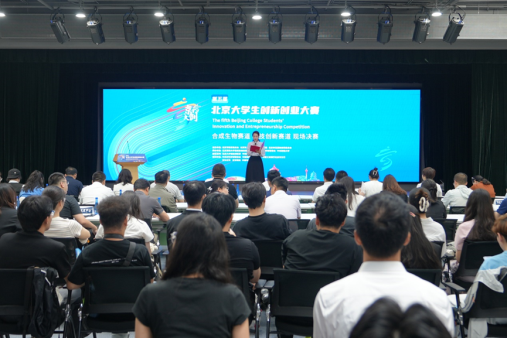
Wang noted that"Jingcai Dachuang"is a core brand for innovation and entrepreneurship among Beijing's higher education institutions. The two tracks,SyntheticBiology and Science & TechnologyInnovation,complement each other, one practical and one forward-looking, one near-term and one long-term, working in tandem to fully demonstrate the breadth, depth, and substance of Beijing college students' innovative and entrepreneurial endeavors. He called for multi-party collaboration to open up pathways for the industrialization of scientific and technological achievements.
Chen stated that CUFE has been rooted in the Shahe Higher Education Park for over a decade, deeply cultivating cross-disciplinary innovation with a focus on finance and economics. With the support of municipal and district governments, the university has been promoting the high-quality development of the education park. He emphasized that this is the first time CUFE has been entrusted with hosting the Science & Technology Innovation Track, which recognizes its achievements in innovation and entrepreneurship education. He encouraged young participants to take this competition as a new starting point and integrate their sci-tech innovation aspirations into the development of Beijing as an international center for science and technology innovation.
Xiong remarked that the competition closely aligns with the strategy of integrating science, education, and talent development. The dual tracks provide a platform for young innovators to showcase and transform their projects. As a core hub for Beijing's sci-tech innovation, Changping district has strategically focused on future industries such as synthetic biology, and has established a comprehensive industrial cluster and full-chain innovation infrastructure, along with multiple industry-university-research collaborative reforms. It also offers a full range of support systems covering talent housing, children's education, and medical services, ensuring the successful implementation and development of outstanding competition projects.
At the event, a special promotional session was held for the Beijing Synthetic Biology Manufacturing Industry Incubation Zone, providing a comprehensive overview of the park's support policies across space, platforms, funding, and talent,precisely matching the needs of participating projects and opening a complete channel from R&D to industrialization.
In this year's competition, the Synthetic Biology Track was established as an independent track and the Science & Technology Innovation Track was hosted byCUFEfor the first time. The dual tracks closely align with the cultivation of new quality productive forces and Beijing's future industriallayout, creating a model of collaborative innovation between universities and local governments that integrates education, science, technology, and talent. Since the launch of the two tracks, they have attracted active participation from 94 synthetic biology project teams and 1,503 science & technology innovation project teams from universities across the city. After multiple rounds of rigorous review and selection, 5 synthetic biology teams and 49 science & technology innovation teams advanced to the final stage. The participating projects span two major areas: frontier future industries and hardcore technologies. The Synthetic Biology Track focuses on biomedicine, microbial testing, bio-based new materials, and cell intelligence; the Science & Technology Innovation Track covers strategic emerging industries such as the low-altitude economy, deep-sea equipment, optical quantum chips, advanced metallic materials, femtosecond precision machining, brain-computer interfaces, and integrated space-air-ground communications. Many of the projects possess proprietary core technologies and demonstrate strong industrialization potential. The finals adopted a "5-minute presentation + 3-minute Q&A" evaluation format, with judging panels composed of experts from industry leaders, research institutes, and investment firms, assessing projects based on technological innovation, market prospects, team strength, and other dimensions.
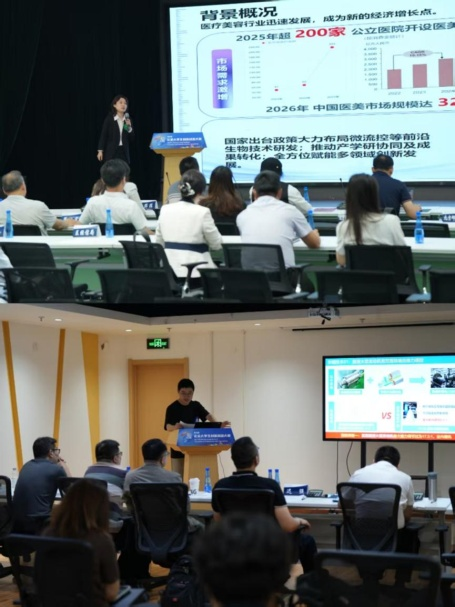
This year's competition is jointly sponsored by the Beijing Municipal Education Commission, the Beijing Municipal Bureau of Human Resources and Social Security, and the Beijing Municipal Commission of Development and Reform, and organized by the Beijing College Students Employment and Entrepreneurship Guidance Center, the Beijing Future Science City Administrative Committee, and CUFE, with operational support fr om the Entrepreneur's Training Camp of Peking Universityand CUFE Science Park. The competition also established a long-term post-event service mechanism, including one-on-one follow-up communication with outstanding projects, matching them with industrial resources, and opening a green channel for project implementation.
Writers: LI Lulu
Reviewers: NING Xiaolin
Editors: WANG Xinyu
Approvers: HUO Xiaoran


 NEWS
NEWS