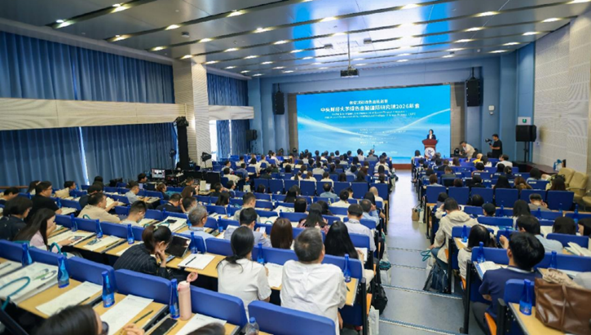
On Sept 12, the 2026 Annual Conference of the International Institute of Green Finance (IIGF) of the Central University of Finance and Economics (CUFE) was held in Lecture Hall 402 of the Academic Hall. With the theme of "Digital Intelligence Empowering Green Finance Innovation", the annual conference featured in-depth discussions on core topics such as AI-driven green finance innovation, climate risk governance, and the construction of a resilient financial system. A number of annual research achievements were released, contributing wisdom and solutions to the high-quality development of green finance.
CUFE vice president Chen Binkai noted in his address that green finance is an important chapter of the "Five Major Areas" in Finance and a key field in which CUFE can leverage its disciplinary advantages and demonstrate its sense of mission and responsibility. Chen said he hoped that the IIGF would continue to adhere to a national-demand orientation, advance interdisciplinary integration, and deepen government-industry-academia-research collaboration, so as to provide intellectual support for policy improvement and market practice. Chen expressed his hope that this annual conference would serve as an opportunity for all sectors to build consensus, learn from and draw on each other's strengths, jointly tackle the practical challenges of digital intelligence empowering green finance innovation, and contribute wisdom and strength to the high-quality development of China's economy and society.
Zhao Yingmin, former vice minister of the Ministry of Ecology and Environment and president of the BRI International Green Development Coalition (BRIGC), delivered the opening speech. Zhao pointed out that global climate risks are currently intensifying significantly, and that the green and low-carbon transition has become an irreversible trend of the times and an intrinsic requirement for China's high-quality development. Digital intelligence technologies are providing key support for green finance to move from quantitative accumulation to qualitative improvement. Regarding the energy consumption of AI computing power, Zhao advocated a balanced perspective, promoting the synergy between computing power and green electricity, and connecting the "electricity–carbon–computing" chain. The building of a green Belt and Road provides a broad stage for digital intelligence technologies to drive green finance innovation. Multilateral cooperation mechanisms should be leveraged to jointly build a green big data platform, help developing countries bridge the information gap, and promote the mutual recognition and alignment of Chinese and foreign green finance standards.
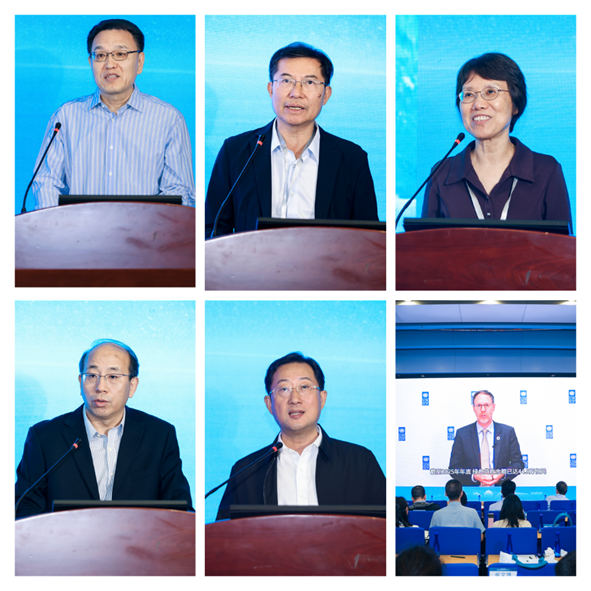
Keynote speeches were delivered on site by Wang Xin, director general of the Research Bureau of the People's Bank of China; Li Li, second-level inspector of the Bond Supervision Department of the China Securities Regulatory Commission; Li Zhong, deputy director of the Energy Research Institute of the National Development and Reform Commission; Lin Shan, deputy director of the International Economics and Finance Institute of the Ministry of Finance; and Zhang Jie, vice president of the China Chamber of Commerce for Import and Export of Light Industrial Products and Arts-Crafts. Li Sifan, representative of the United Nations Development Program (UNDP) in China, gave a video address. This segment was moderated by Wang Hongmei, assistant to CUFE president and dean of the university's National Academy of Financial and Economic Strategy.
Wang Xin pointed out that in some regions, the massive water consumption of AI computing centers may trigger risks such as exacerbating ecosystem degradation, impacting water-intensive industries such as agriculture, affecting the public's water-use interests, and ultimately transmitting water-cycle imbalances in ways that could affect financial stability. Li Zhong stated that establishing and improving the mechanism for realizing the value of ecological products is an important lever for promoting the comprehensive green transformation of economic and social development. During the 15th Five-Year Plan period (2026-2030), the country will advance this in a coordinated manner from multiple dimensions, including the market-based allocation of resource and environmental factors, the building of a Beautiful China, and the carbon peaking efforts. Lin Shan pointed out that during the 15th Five-Year Plan period, the fiscal authorities will continue to ensure investment in the ecological and environmental field, promote the improvement of a diversified funding investment pattern, strengthen the synergy between green fiscal policy and green finance, and deepen international exchanges and cooperation on green development. In his speech, Zhang Jie called for pooling the joint efforts of the government, industry, and enterprises to build a green trade development system for light industry and overcome international green barriers. Li Sifan stated that China has valuable experience in using public funds to leverage investment, and that the UNDP is willing to continue to play a bridging role, bringing China's effective practices to the global stage and promoting the building of a sustainable future shared by all.
Wang Yao, research fellow at the National Academy of Financial and Economic Strategy and dean of the IIGF, delivered the annual work report at the conference, systematically reviewing the institute's progress over the past year in green finance policy research, market practice, international cooperation, and capacity building. Attending guests jointly watched a short introductory video on the Green Finance Laboratory to learn about its construction and its latest progress in the fields of green identification and climate risk research.
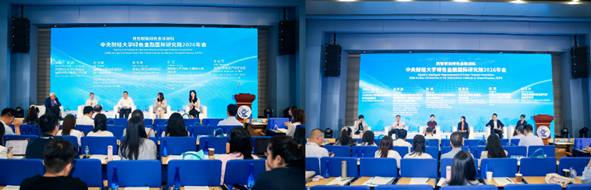
The conference released achievements on ESG for insurance funds, biodiversity risks in the asset management industry, financial support for the joint operation of coal power and new energy, and green finance helping the sustainable transformation of nature-related supply chains. It also held two roundtable forums — "AI-Driven Green Finance Innovation and Low-Carbon Transformation of the Real Economy" and "Climate Risk Governance and the Construction of a Resilient Financial System", exploring how to use digital technology to amplify the role of green finance in empowering transformation, and effective paths for building a climate-resilient financial system.
In his concluding remarks, Shi Jianping, chairman of the board of the IIGF, pointed out that the Institute will continue to focus on national strategy, cultivate cutting-edge fields of green finance, produce more high-quality think-tank results, and continue to build a high-level exchange platform, boosting China's green finance reform and innovation as well as global sustainable development cooperation.
More than 300 representatives from government, industry, academia, research, international organizations and other fields attended the annual conference to jointly study the path of high-quality development of green finance. The conference received over 400,000 online views through media and platforms such as China Environment News, National Business Daily, The Economic Observer, and Tencent News.
Writers: DUAN Danchen
Reviewers: WANG Hongmei, ZHANG Jian
Editors: WANG Xinyu
Approvers: HUO Xiaoran


 EVENTS